
Part 1: The Boy Who Punched Walls (Late 1960s – Early 1980s)
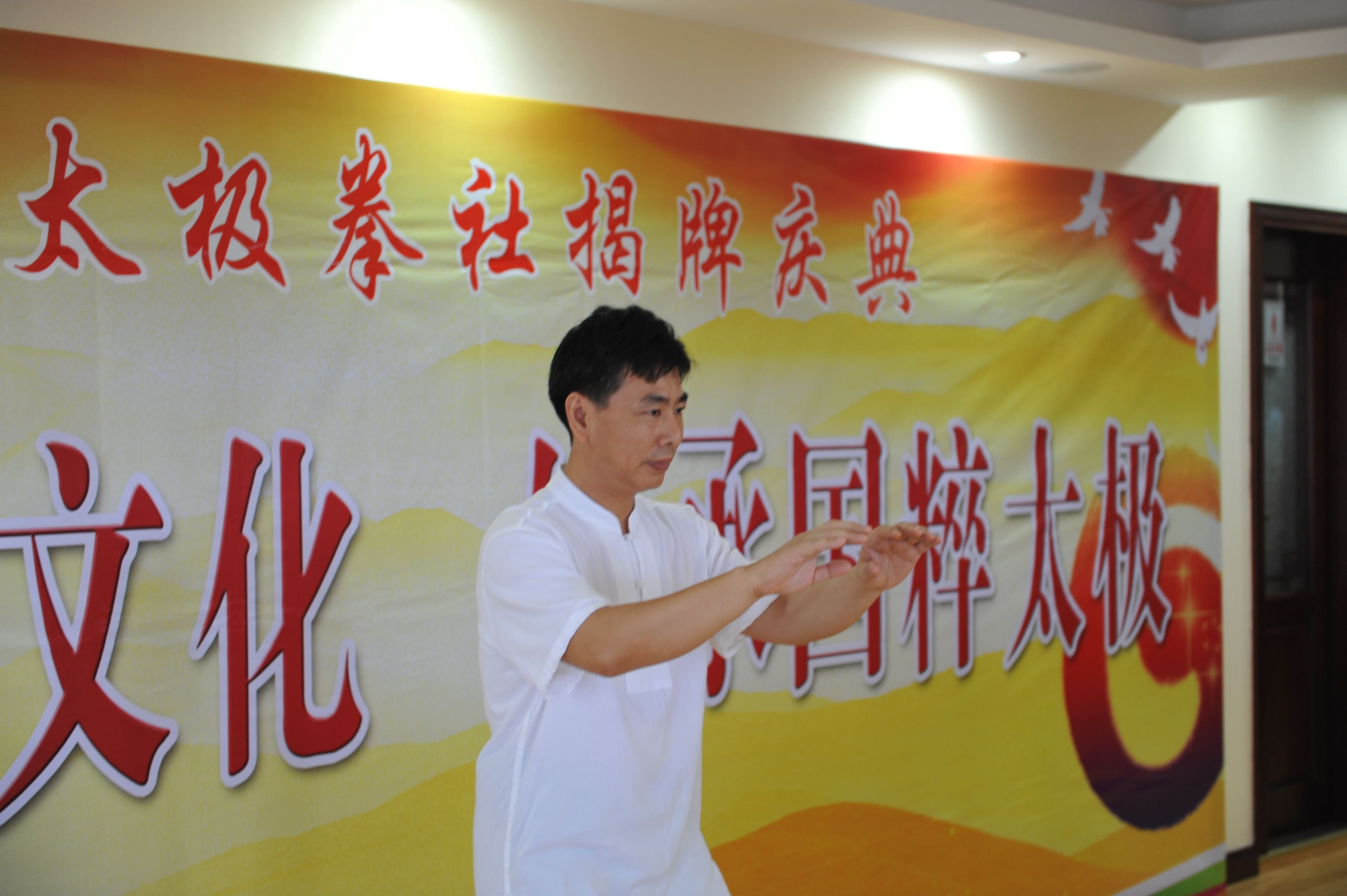
Before becoming a Tai Chi inheritor capable of relying on internal energy and breath cultivation to conquer life-and-death crises, Wang Zuoyao’s martial arts journey began with the most primal, unadorned thirst for physical power in the rural townships of southern Fujian. It was an era defined by sweat, blood, and naive obsession—a time when a young boy by the sea knocked on the gates of the martial world using the clumsiest possible methods just to test the physical limits of his own body.
I. A Coastal Heritage of Survival: A Carrying Pole Over Imperial Exams
In the late 1960s, Wang Zuoyao was born in Hengcuo Village, located within the Tong'an District of Xiamen, Fujian Province. He was the fifth of seven children in a large family. Growing up in this bustling household instilled in young Zuoyao a sharp, playful, and highly energetic disposition, along with an innate understanding of how to survive and navigate within a group.
The land of Tong'an had been steeped in a profound martial culture dating back to the Ming Dynasty. Situated along the rugged southern coast of Fujian, the region had historically been plagued by Japanese pirates and local bandits, making martial arts a practical necessity for survival and self-defense. Over generations, the local populace came to agree upon a simple, unadorned rule of survival:
Pursuing scholarly honors through imperial examinations was certainly good for one's descendants, but practicing martial arts to strengthen the body, defend the home, and protect the homeland was far more practical.
Consequently, folk martial arts lineages such as Southern Fist (Nanquan), White Crane Fist, and Plum Blossom Fist were passed down from generation to generation across the villages, ensuring there was never a shortage of hard-boned martial practitioners in the countryside.
During his early childhood, Zuoyao was thoroughly fascinated by the village martial legends recounted by the older generation. Among these, the story that left the most profound impact on him involved an elder from his own clan. According to local lore from the 1940s, this uncle had relied on nothing more than a simple wooden carrying pole (扁担) to single-handedly fight off over thirty strong men during an encounter, emerging completely unscathed while routing his opponents.
For a young boy, single-handedly battling over thirty men with a carrying pole was far more than just an exciting story; it was a grand, living myth of life energy. Young Zuoyao would often ponder to himself in secret: "How can a person possibly train to reach such an incredible level of mastery?". From that moment on, a deep, boundless admiration and longing for extraordinary Kung Fu took firm root in his heart.
II. The Military Visitor and the Taste of Victory
Between 1976 and 1978, at the age of eight, Wang Zuoyao experienced his very first awakening in "real combat".
During that time, a friend of his brother-in-law frequently visited their home as a guest. This friend was an active-duty military soldier stationed in Shanghai who was not only remarkably agile, but also highly skilled in practical military and police grappling techniques (Qinna / 擒拿). Seeing how curious and physically active young Zuoyao was, the visiting soldier took the time to teach the eight-year-old a few foundational grappling moves designed to target joint vulnerabilities and mechanical blind spots.
For a country boy, these no-nonsense grappling techniques opened up an absolute treasure trove. Blessed with an exceptional memory, Zuoyao absorbed the instruction instantly and immediately put his new skills to use in daily scuffles and playful battles with his village peers:
Technical Dominance: While his peers fought instinctively with wild, disorganized swinging, Zuoyao leveraged his control over mechanical blind spots to secure an absolute advantage in their skirmishes.
The Thrill of Achievement: A consistent winning streak brought the eight-year-old boy an unprecedented sense of joy, fulfillment, and personal triumph.
In the midst of this youthful pride, Zuoyao's sharp mind connected his experiences to a traditional Chinese idiom: "Mo Quan Ca Zhang" (摩拳擦掌 — literally, rubbing one's fists and wiping one's palms). To his understanding, this phrase described more than just the nervous excitement before a battle; it represented an eager, impatient thirst to acquire tangible physical power through one's own fists.
III. Flesh Against Concrete: The Birth of the "Martial Obsessive"
To truly experience the satisfying weight of this physical power, the eight-year-old Wang Zuoyao embarked on a course of action that would seem incomprehensible—and even border on madness—to the average person: he decided to use his bare, flesh-and-blood fists to slam directly into the concrete walls of his home.
His naive childhood logic was simple: since basic grappling had allowed him to dominate his peers, if he could forge the legendary "iron fist" capable of shattering stone, he would surely become just as powerful and invincible as his legendary uncle with the carrying pole.
Thus, a brutal, secret training regimen against the family's concrete wall began:
Day-to-Day Ruthlessness: Every single day, he secretly snuck to a corner of the house, swinging his small fists to silently and relentlessly slam them into the cold, hard concrete.
Physical Backlash: The inevitable result of flesh colliding with concrete was severe physical trauma; his knuckles were repeatedly peeled, bleeding, and heavily swollen, with fresh wounds constantly stacking on top of unhealed old ones.
Obsessive Persistence: Driven by a stubborn ruthlessness, he refused to stop even when his hands were so swollen he could barely hold a rice bowl steadily, eventually using sheer force to crack the concrete corner of his house.
However, this blind, brute-force rebellion against external matter did not grant him the legendary, divine Kung Fu he had envisioned. The calluses on his hands grew thicker layer by layer, and the agonizing pain returned time and again, yet young Zuoyao's heart filled with profound confusion:
"Why is it that even after injuring my hands this badly, I still cannot produce real martial power?"
💡 Biographical Note: The Spiritual Metaphor
This childhood ordeal of repeatedly punching concrete corners until his knuckles bled—only to be left in deep confusion—forms a vital spiritual metaphor in Wang Zuoyao's life story. It authentically exposed his inherent "Martial Obsessive" (Wu Chi / 武痴) nature: a capacity for absolute, uncalculated immersion. Yet, it was precisely the frustration born from this blind pursuit of external brute force and physical toughness that planted the seed for his vital realization decades later: without systemic guidance, external brawn is ultimately a dead end. This early failure foreshadowed his eventual awakening to turn inward and explore the "invisible interior space".
IV. Conclusion: Stepping Toward the Authentic Gate
By the early 1980s, as he grew older and his physical strength matured, young Wang Zuoyao’s exploration of martial arts evolved beyond the solitary, wild growth of punching walls.
Through an early enlightenment paid for with the scars on the backs of his hands and the cracked corners of a concrete wall, his absolute ruthlessness had already proven that he possessed the foundational qualities of his future "Four Pillars of Mastery": an intense, insatiable hunger for martial arts (the sprouting of Talent) and an absolute self-discipline that refused to yield to physical pain (the embryonic form of Diligence).
He understood that to acquire true Kung Fu capable of defending oneself and fighting ten men at once, the naive excitement of "rubbing fists" and brute physical force were nowhere near enough. He desperately needed systematic guidance and authentic lineage instruction.
Carrying that unquenchable fire of the "Martial Obsessive" that had burned within him since age eight, Wang Zuoyao stepped into middle school, followed his cousin across the threshold of orthodox Southern Fist (Nanquan), and eagerly devoured Wushu magazines. He officially embarked on a decades-long journey of systematic martial arts training, setting out to pursue the vast martial world he had longed for all his life.

Comments
Only signed-in members can comment. Comments appear immediately; the team may hide spam or abuse later.
…