
Preface: The Invisible Interior
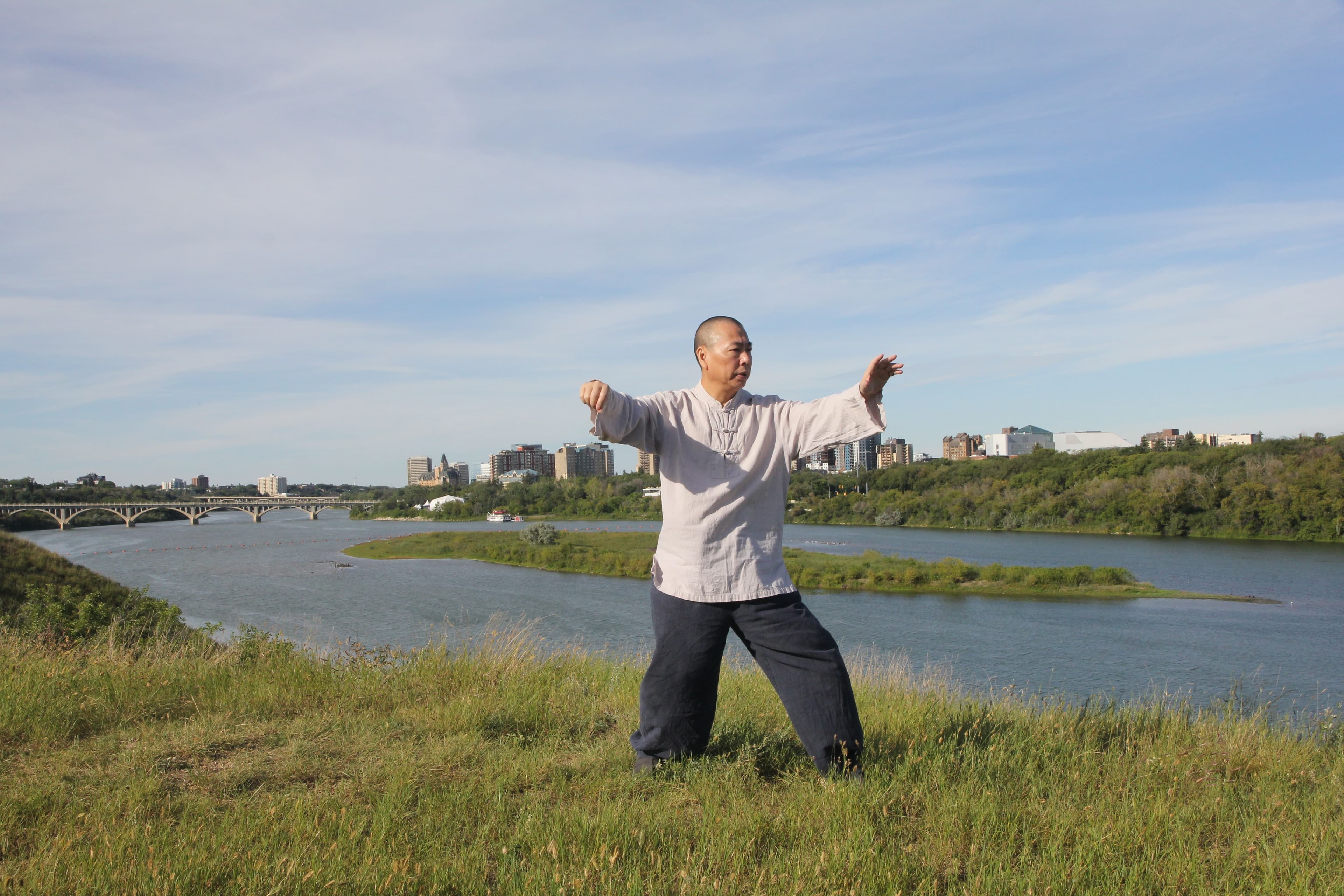
"The difference between people does not lie in a hundred or two hundred jin of physical weight, but in that 'invisible interior space' that others cannot see."
This profound monologue is not derived from mystical scripture, but is an iron law of life realized by Tai Chi Master Wang Zuoyao through a lifetime of ups and downs, physical trauma, and life-and-death trials.
In the clamor of modern society, public perception of martial arts and Tai Chi often falls into two extremes:
People either view it as slow-motion gymnastics for the elderly's morning exercise.
Alternatively, they treat it as a mystical street combat tool to prove who hits harder in a fight.
However, in Wang Zuoyao's legendary martial arts journey across the ocean, true martial arts is never found in swords, shadows, or bloody fighting. Tai Chi internal cultivation is neither mere physical exercise nor a performative routine to show off brute physical force. Instead, it is a deep path of physical cultivation, energy nourishment, and mental healing—a thorough revolution facing oneself. Its ultimate meaning lies in the relentless sculpting and endless restructuring of that "invisible interior space" within one's body that others cannot see.
The Hook: Conquering Death in a Canadian ICU
To understand the power of this internal cultivation, one must look to its ultimate climax in a Canadian ICU. In a university hospital in Saskatoon, Saskatchewan, Wang Zuoyao faced the grim shadow of death, battling multiple organ failure and severe lung effusion.
Relying on decades of accumulated Qigong breathing and internal energy cultivation, he fought back against the physiological crisis without relying on immediate surgical fluid extraction. Upon achieving a profound bodily restructuring and conquering death, he sang the English song "You Are My Sunshine" to his family with utmost gratitude and pure joy.
Section I: The Philosophical Lens Behind the Choices
When first learning of Wang Zuoyao's life, people are often astonished by his seemingly mad and obsessive decisions:
Why would a business elite in Tong'an, Fujian, who built an empire generating over a million yuan in annual profit, shut down his lucrative factory at over forty years old without a trace of regret, just to stand in a training posture and restart from zero like a "blank sheet of paper"?
Why would he spend all his savings and donate two of his own downtown apartments to spend an entire year renovating a martial arts club, risking personal bankruptcy just to guarantee his master's livelihood and keep the authentic lineage in his hometown of Tong'an?
Why, after relocating across the ocean to settle in the quiet Canadian town of Saskatoon, did he remain completely unmoved by high salaries and lucrative commercial offers, choosing instead to teach Tai Chi tailored to individuals in small towns and communities as an act of pure sharing and duty?
To truly understand these actions of burning his boats, one must grasp the philosophical foundation that spans Wang Zuoyao's lifelong martial arts pursuit. This is summarized in his "Four Pillars of Mastery," an iron law forged through decades of blood, sweat, and mental cultivation:
The Four Pillars of Mastery
Affinity (Yuanfen / 缘分): Finding a true master rather than just a famous one. This requires refusing name-brand masters with empty reputations. Instead, it means meeting a truly understanding master who can instantly see through your pain points and understand your specific needs at different stages of cultivation.
Talent (Tianfen / 天分): Relying on inward sensitivity rather than physical brawn or brute strength. Its core consists of one percent inspiration and ninety-nine percent sweat. True talent is reflected in a practitioner's sensitivity and inward comprehension of subtle internal physical changes, requiring constant inward focus.
Diligence (Qinfen / 勤奋): The extreme channeling and transformation of focus. The essence lies in turning bad habits into good ones. Just as people can spend over ten hours drinking, socializing, or playing video games without feeling tired, true diligence means channeling that same lasting focus into physical martial arts training.
Duty (Benfen / 本分): A lifelong, insatiable hunger for practice. Practitioners must treat Tai Chi as essential "spiritual food" in their lives. There is no room for illusions of once-and-for-all success; just as one eats a meal and must eat the next, a practitioner must maintain a lifelong hunger for internal elevation.
Section II: A Life Restructured Across Time and Space
Against the backdrop of historical currents and cross-cultural collisions, this narrative series chronologically traces Wang Zuoyao's compelling hero's journey through the lens of Tai Chi mental cultivation and internal energy advancement:
The Boy Who Punched Walls (1960s–1980s): From a naive boy in Tong'an, Fujian, who secretly slammed his bloody knuckles against concrete walls day after day after hearing local martial legends.
The Martial Obsessive (1980s–1990s): To a chief disciple immersing himself in Shaolin Plum Blossom Fist, training over ten hours daily until intense mechanical repetition left him with deep, hidden physical trauma.
Commercial Triumph and Internal Collapse (1993–2010): From a lost businessman whose corporate lifestyle shattered his health and triggered weather-related joint pain, to encountering a master in a park, abandoning his business, and completing multiple levels of internal energy restructuring.
This is not merely a personal memoir, but an energy manifesto for the modern world. It documents how a martial artist embraces the "subtraction philosophy" and "simplicity of the great path" in an impatient era. It shows how, through tailored teaching in a foreign land, he helped myasthenia gravis patients, chemotherapy survivors, and everyday people with chronic strain escape their suffering and stand tall again.
Ultimately, this narrative bears witness to an ordinary physical body relying on extreme self-discipline, benevolent transmission, and the courage to face death in order to pioneer and guard that profound, vast "invisible interior space."
Comments
Only signed-in members can comment. Comments appear immediately; the team may hide spam or abuse later.
…