
Part 2: The "Martial Obsessive" and the Illusion of Invincibility (1980s – 1990s)
"Many people saw me training over ten hours a day, covered in injuries, and thought I was an ascetic monk. But I have never denied the nickname 'Martial Obsessive'—I loved it, and once I started practicing, I couldn't stop. To me, this was never suffering, but true enjoyment. I was too happy to even think of it as hardship."
— Wang Zuoyao
From the clumsy boy who punched concrete walls with his bare, bleeding knuckles to a martial artist who truly knew how to stand his ground in the martial world, Wang Zuoyao completed an extreme outward exploration of external boxing during the 1980s and 1990s. This was an intense era defined by iron, blood, sweat, pain, and profound loneliness. In a remarkably short period, he ascended to the technical peak of traditional external boxing and eclectic weapon fighting, becoming a revered "Chief Disciple". Yet, at the same time, an increasingly complex repertoire of moves and accumulating hidden physical trauma began to stir an unprecedented fog of confusion and deep questioning within his heart.
I. Rooting in Southern Fist and the Martial World in Magazines (Early 1980s)
In the early 1980s, as he grew older and entered middle school, Wang Zuoyao finally left behind his foundational stage of naive brawn and imitation—the days of merely "rubbing fists and wiping palms". He understood that to acquire profound, authentic martial arts, he had to undergo the systematic and rigorous baptism of an orthodox lineage. In his homeland of Tong'an, Fujian, a region steeped in martial tradition, Southern Fist (Nanquan) was one of the most deeply rooted styles. Following his cousin, Wang officially stepped across the threshold of Southern Fist training.
The Monotonous Foundation: Over the course of two to three years, he shed his youthful restlessness and persistently endured the most tedious foundation training, practicing horse stances, basic punching, and fundamental drills day in and day out without interruption. This solid lower-body stability and muscular strength built the physical foundation required for him to endure ultra-high-intensity training in the future.
Enlightenment on Paper: During this period, Wang became obsessed with reading Wushu (Martial Arts) magazines. These ink-printed journals opened a door to the national martial arts world, elevating his perspective beyond village skirmishes to the theoretical landscapes and grand traditions of historical and contemporary martial masters.
His thirst for martial arts burned in his chest like an unquenchable fire. However, his preliminary foundation in Southern Fist could no longer satisfy his appetite, and he began to yearn for a true, peerless master who could guide him into the deeper realms of Kung Fu.
II. Shaolin Apprenticeship and the Extreme Ten-Hour Daily Regimen (1990)
In 1990, at the age of twenty-one, Wang Zuoyao encountered the first major turning point of his martial career: he met Master Zhang Xuezhi, a lineage holder of Southern Shaolin Plum Blossom Fist.
At their first meeting, Master Zhang did not need to display any flashy routines; he simply extended his hands, and that alone completely convinced Wang. The master's palms featured thick, flat knuckles covered in heavy calluses—the unmistakable mark of a true practitioner forged through countless hours of real blood, sweat, and hard labor. Deeply shaken, Wang did not hesitate for a second and immediately became Master Zhang's disciple.
Once inside the door of Shaolin Plum Blossom Fist, the inherent "Martial Obsessive" (Wu Chi) madness in Wang's bones erupted completely. In pursuit of perfection, he compressed his daily life to the absolute limit, initiating a grueling "devil training" regimen unimaginable to ordinary people:
Ten-Plus Hours Daily: He woke up extremely early every morning for two to three hours of dawn practice. After his daily work, he spent every spare moment immersed in forms and weapons, consistently maintaining over ten hours of martial arts training every single day.
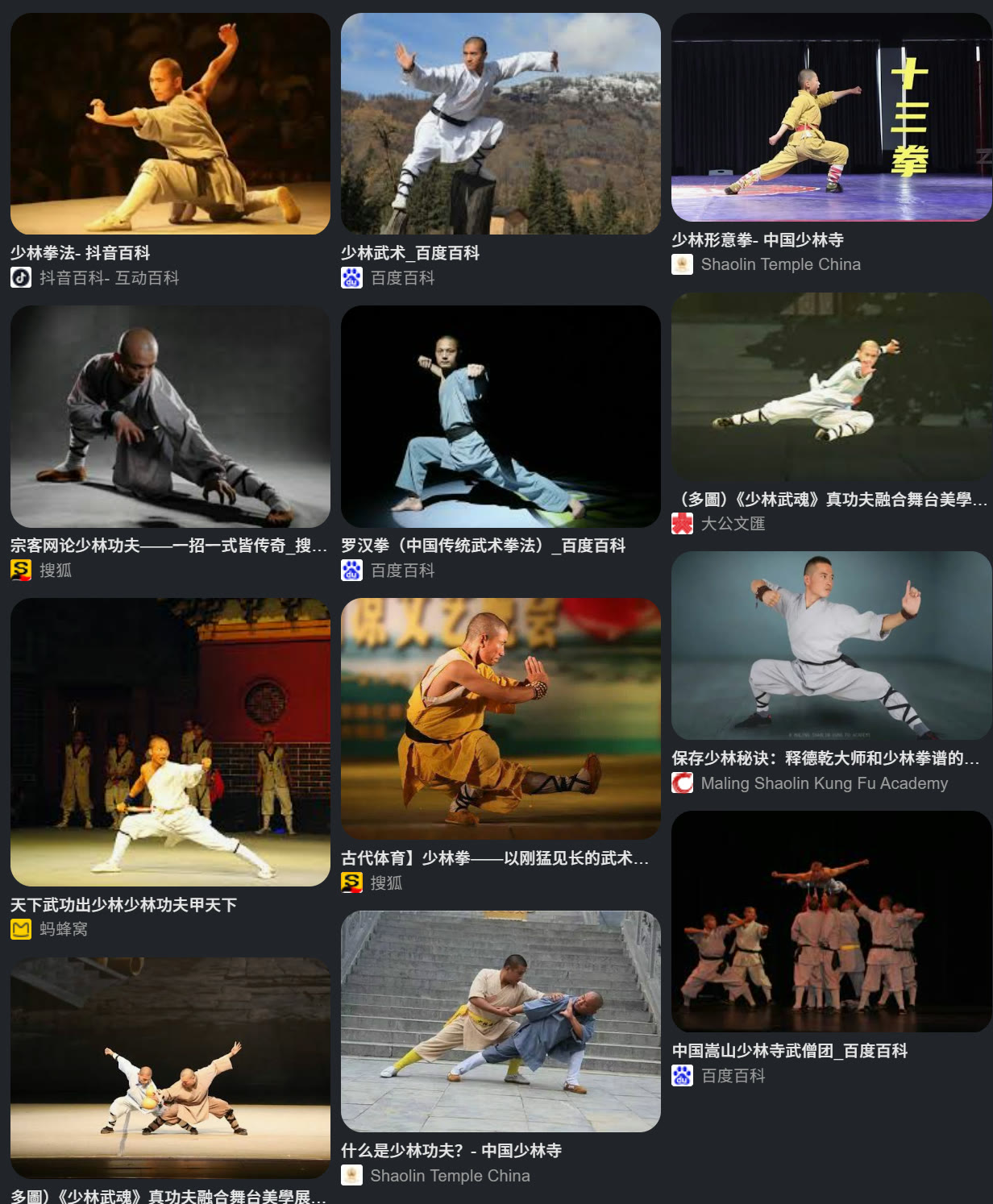
Comprehensive Weapons and Boxing: He greedily absorbed every skill his master taught with astonishing memory and physical stamina. He mastered long, short, soft, and hard weapons—including the broadsword, spear, sword, halberd, nine-section whip, and three-section staff—as well as various boxing styles like Drunken Fist and Mantis Fist.
Relentless Self-Demand: Driven by his love for martial arts, he was also propelled by a deep, simple fear: he was terrified that when his master taught a new move, he had not yet perfected the previous lesson to a flawless degree.
"During those days under Master Zhang, I truly risked my life. What I feared most wasn't exhaustion or pain, but the look from my master thinking I hadn't trained well enough. To learn true skills, you cannot leave yourself half a retreat."
III. The Chief Disciple and the Price of Being the "Martial Obsessive"
Relying on such extreme, borderline self-destructive diligence, combined with an understanding of mechanical structures that surpassed ordinary people, Wang Zuoyao's progress under Master Zhang Xuezhi was nothing short of astonishing.
At the time, Master Zhang had over a hundred students. Yet, in less than two years, the early-twenties Wang stood out among the crowd to become the very first formal disciple (Chief Disciple) enrolled by Master Zhang in Fujian. This was not only a supreme martial honor, but also an absolute recognition of his strength and character within the traditional lineage system.
However, behind the dazzling title of "Chief Disciple" lay unspeakable loneliness and physical pain:
Dimension Specific Manifestation Psychological State / Consequence
External Evaluation Friends and peers unanimously bestowed upon him the nickname "Martial Obsessive" (Wu Chi), believing he had completely lost interest in ordinary entertainment and leisure activities. Extreme Immersion: He completely channeled the ten-plus hours of focus that ordinary people spent on drinking, socializing, or gaming into the physical refinement of martial arts.
Physical Price High-intensity hard-body conditioning and weapon drills left his body constantly covered in bruises. New injuries stacked upon unhealed old ones, leaving deep, hidden physical trauma in his knees, chest, ribs, and joints. Hidden Peril: His youthful muscles and bones endured the pain, but this excessive exertion of external hard force planted a massive time bomb for his body's total breakdown in middle age.
Wang Zuoyao gladly accepted the calluses, bruises, and endless mechanical repetitions. Through high-frequency physical tempering, he embodied the deepest meaning of "Diligence" from the Four Pillars of Mastery: it was not about forcing oneself to suffer, but about channeling focus into an extraordinary realm of enjoyment.
IV. Eclectic Absorption and the Paradox of External Strength vs. Internal Emptiness
After reaching the peak of achievement in Shaolin Plum Blossom Fist, Wang Zuoyao did not stop his pursuit. He astutely realized that while the fierceness, speed, and aggression of external boxing offered tremendous advantages in sudden encounters and physical stamina, it did not represent the entirety of the martial arts system.
Seeking a breakthrough, he threw himself with immense enthusiasm into visiting and learning from various other schools. During this time, he studied and absorbed routines and forms from multiple lineages, including Chen-style, Zhaobao-style, and Wu-style Tai Chi.
However, a highly ironic paradox began to emerge in this middle-aged martial artist at the peak of his physical strength and technical skill:
Externally Stronger: He could wield eighteen weapons impeccably, possessed explosive punching and kicking power, and mastered an increasing number of routines from various schools, becoming a formidable and revered figure in the local martial arts circle.
Internally More Lost: As he learned more moves, his internal sense of emptiness grew deeper. The mechanical logic of different schools conflicted with one another, and while the numerous routines looked impressive, they remained superficial exercises of external muscle and bone. He still could not experience the legendary "true kung fu" capable of thoroughly nourishing and filling the internal space of life.
After every exhausting late-night practice, dragging a body filled with aching joints, Wang Zuoyao would sit by the edge of the training ground, sinking into deep self-doubt:
"So many routines, conflicting systems. My body looks stronger on the surface, but inside I am more lost. I thought I would just keep learning like this, carrying my injuries and various martial styles... But to be honest, by then I no longer believed I could touch the true core of martial arts, nor did I believe I would ever meet that truly understanding 'master' in this lifetime."
This was the collective pressure and helplessness of an external boxing master who had hit the technical ceiling: he possessed devastating "physical power," yet found himself completely lost at the crossroads leading to "internal energy".
V. Conclusion: The External Peak, Waiting for the Turning Point
Throughout the 1980s and into the late 1990s, Wang Zuoyao spent nearly twenty years of fanaticism and obsession reaching the technical pinnacle achievable by a traditional external martial artist. He earned the celebrated reputation of the "Martial Obsessive," secured the status of Shaolin Chief Disciple, and built the proud confidence of mastering numerous weapons and boxing styles.
However, natural law dictates that an arrow at the end of its flight cannot pierce thin silk. This blind pursuit of external hardness—paid for by overdrawing his physical body and draining his vitality—combined with his impending decade of day-and-night business socializing, was quietly sounding a fatal alarm inside his body. Those accumulated hidden injuries, which had begun to torment his chest and knees on rainy days, were simply waiting for a critical breaking point to fully erupt.
The "true martial core" and "internal mind-method" he sought so bitterly in the fog would have to wait until he plunged into the lowest valley of health and life. Only then, on a seemingly accidental park morning, would the authentic gate finally open to him, presenting a path of "healing through yielding" and rebirth from the ashes of death.
Comments
Only signed-in members can comment. Comments appear immediately; the team may hide spam or abuse later.
…