What are Yang-style Tai Chi and internal martial arts?
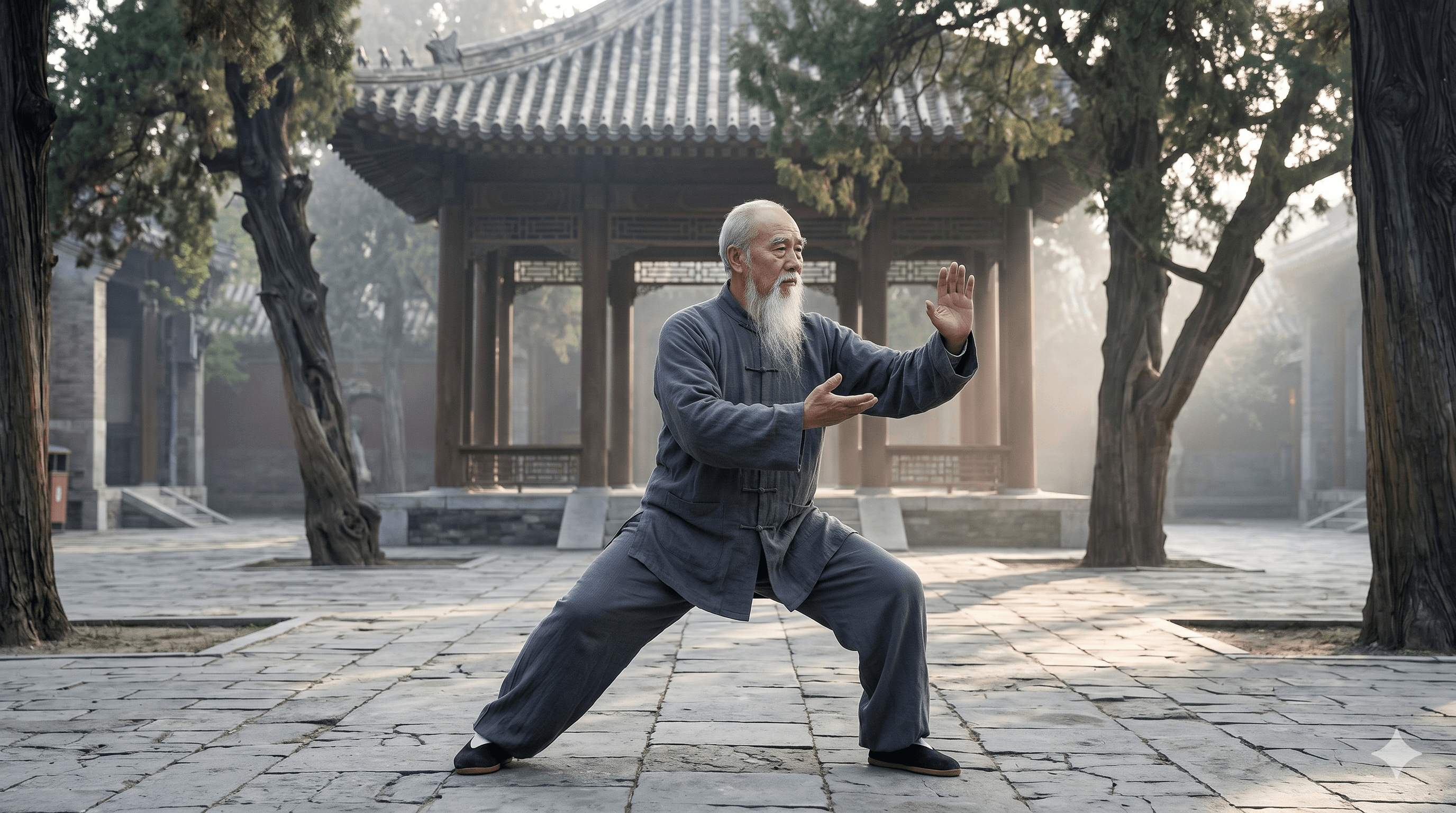
When we talk about Yang-style Taiji “old frame” and internal martial arts, there are a few key points:
1.Yang-style Old Frame
a. It comes from Yang Luchan, who learned in Chen Village, and was later passed down and systematized by Yang Chengfu. b.The “old frame” means the earlier version, before it was simplified. Movements are bigger, fuller, and the original power methods (“peng, lu, ji, an”) are kept intact. c.Training the old frame is not just about moving through postures. Each move contains stored energy, like being ready to release at any moment. It’s about cultivating strength, breath, and stability. d.Compared to the later “new frame” or simplified Taiji sets, the old frame focuses more on internal power and martial application.
2.What all internal martial arts share
a.They emphasize “using intention to lead energy, and energy to move the body.” No brute force, everything flows from the mind guiding the body. b.The body should stay upright and relaxed, breathing natural. c.Taiji, Xingyi, and Bagua are different on the outside, but inside they share the same foundation: internal skill first, techniques second. d.When the practice matures, the whole body works as one unit — stable like a mountain, flowing like water.
3.Why few people practice seriously today
a.Internal skill takes time, and modern life wants fast results. b.If people aren’t facing a life crisis (like illness or survival), most don’t want to spend decades on something that feels “invisible.” c.Gym workouts, jogging, or quick fitness routines give faster, measurable results. d.Also, you really need a teacher. Watching and copying movements alone almost never leads to real internal power.
4.Practical use and personal growth
a.The old frame isn’t only about fighting. Many practice it later in life for health — balancing body and mind, slowing aging, staying flexible. b.Traditionally, true masters in their old age show less “hard” or “obvious” technique. Their movement becomes smaller, softer, more subtle — yet more powerful.
In short:
The real value of Taiji (especially Yang-style old frame and other internal arts) isn’t in the outward forms, but in the internal work behind them — calming the mind, nurturing energy, storing power, and unifying the body.