
The Tai Chi Life of a “Martial Arts Addict” — The Story of Wang Zuyao
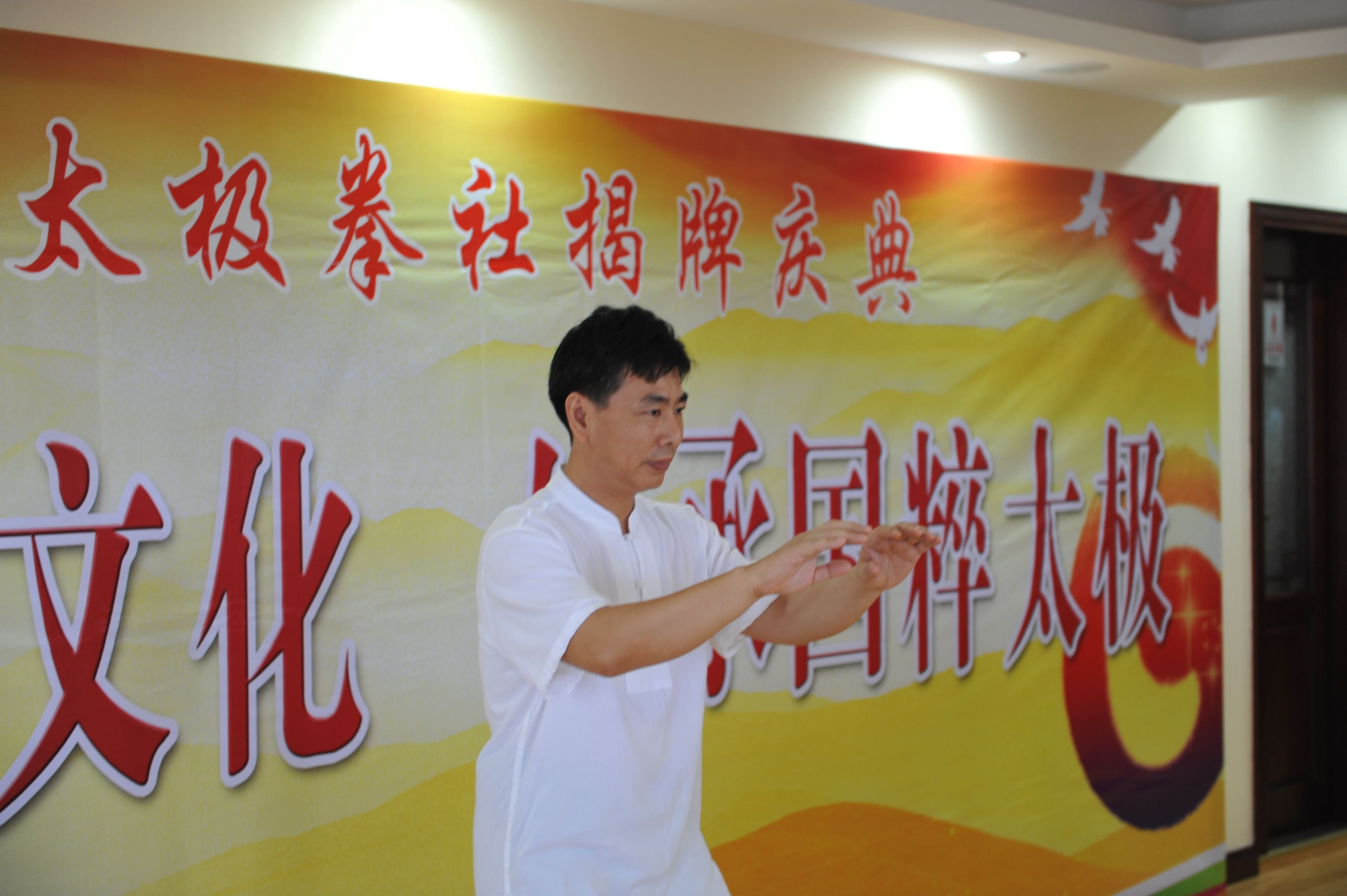
Tong’an, in Fujian Province, is a place with a deep love for martial arts. Since the Ming dynasty, people there have believed that the strength you carry in your body is more real than any rank earned through imperial exams.
Wang Zuyao was born into that kind of soil.
He was the youngest of eight siblings—bright, restless, and full of mischief. His fascination with martial arts began early, sparked by a story about a local elder who, back in the 1940s, could take on more than thirty strong men with nothing but a shoulder pole.
“I kept thinking—how could someone possibly be that powerful?”
At eight years old, a stationed soldier taught him a few grappling techniques. He went straight home to try them out on his friends—and kept winning. From then on, he lived in a state of constant readiness, always eager for a challenge. Once, he even punched a wall, hoping to build up “hard” power. He ended up with swollen, aching hands.
“I was confused back then—why couldn’t I punch out real kung fu?”
But that was the beginning of his path.
In middle school, he studied Southern Fist styles and devoured issues of Wushu Magazine. At 21, he met Master Zhang Xuezhi, a coach of Shaolin Plum Blossom Boxing, and his training intensified into something close to obsession. He practiced weapons and forms relentlessly—broadsword, spear, staff, nine-section whip, Drunken Fist, Praying Mantis—more than ten hours a day. He learned fast and trained hard. In less than two years, he became Master Zhang’s top disciple in Fujian.
People called him a “martial arts addict.” He never denied it.
“I loved it. Once I started, I couldn’t stop.”
But after forty, years of overexertion and social drinking began to take their toll. Fatty liver disease, old injuries, a persistent tightness in his chest—his body was no longer what it used to be.
That’s when he realized: it was no longer about training martial arts, but about nurturing the body.
He turned to hiking, fitness, and eventually Tai Chi. In his seventies, Master Hong Lihua saw his dedication and agreed to teach him Tai Chi and Tai Chi sword, even gifting him a book titled The Inner Methods of Tai Chi.
One line from the book stayed with him:
“Under the guidance of a true master, Tai Chi inner skill can be achieved in ten years.”
After three and a half years of practice, his health improved. For the first time, he truly understood what it meant to cultivate strength—not force it.
Then came the turning point.
In the spring of 2011, at age 43, he saw a stranger practicing in a park. The man’s movements were steady yet powerful—flowing, expansive, controlled.
Wang recognized it instantly: this was real internal skill.
The man was Master Ni Jianhao, a seventh-generation inheritor of Yang-style Tai Chi, a national push-hands champion who had sparred with over 300 skilled practitioners. Meeting him changed Wang’s life completely.
That afternoon, Wang was supposed to accompany relatives on an outing. But his mind was elsewhere—replaying every movement he had just seen. One relative noticed and said, “Why don’t you go back and ask if he’d teach you?”
So he did.
At first, Master Ni only corrected a few of his movements. But within a week, Wang felt a noticeable shift in his body—lighter, more connected. He knew: this was the teacher who could truly lead him into the deeper gates of Tai Chi.
He called his former teacher in Macau, received her understanding and blessing, and formally became Master Ni’s disciple.
This time, he held nothing back.
He shut down a business that had been earning enough to buy a home each year. From then on, he devoted himself entirely to training—ten hours a day, starting from the very basics. He rebuilt his foundation from scratch. His standing meditation practice grew from two hours to three, eventually reaching six hours or more.
“For me, it wasn’t hardship—it was enjoyment. I couldn’t be happier doing this.”
Just as he was fully immersed, news came that Master Ni was planning to move to the United States.
Wang felt a jolt.
He knew that if he lost this teacher, his path in Tai Chi would be cut short. So he made a bold decision: he would find a way to keep his teacher here.
He invested in two high-rise apartments and spent a full year transforming them into a training space. He invited friends and acquaintances to come learn—not for profit, but to create a reason for his teacher to stay.
“If you want real skill, you have to offer real sincerity.”
At the end of 2015, Master Ni invited his own teacher, Grandmaster Kou Guijiang, to give personal instruction. Kou corrected many key details, and before leaving, he told Wang:
“Train the way I’ve shown you. In three years, you’ll surpass your teacher.”
Wang has never forgotten those words.
In 2019, he moved with his family to Canada, settling in the quiet city of Saskatoon.
For the past seven years, he has lived without chasing fame or profit. He holds onto a single wish:
“To carry on Tai Chi—to help people cultivate themselves. Even far from home, I want a place where like-minded people can come together, practice, and grow old in peace.”
Today, he has taught nearly a hundred students and established a training community—not as a business, but as a vessel for transmission.
Tai Chi is his faith. It is also the way he leaves something behind in this world.
When asked if he ever regrets giving up his business, he simply smiles:
“We made enough money to support the family. Now I’m healthy, and my wife doesn’t have to take care of my injuries anymore. Life feels lighter—how could she object?”
Over a lifetime, he transformed from a “martial arts addict” into a true practitioner.
He trained the body, but ultimately, he cultivated the heart.
He never set out to become famous. But the depth of his skill—and the sincerity of his dedication—speak for themselves.
YouTube:www.youtube.com/@arise_core
Comments
Only signed-in members can comment. Comments appear immediately; the team may hide spam or abuse later.
…