Tai Chi: The Right Path of Subtraction
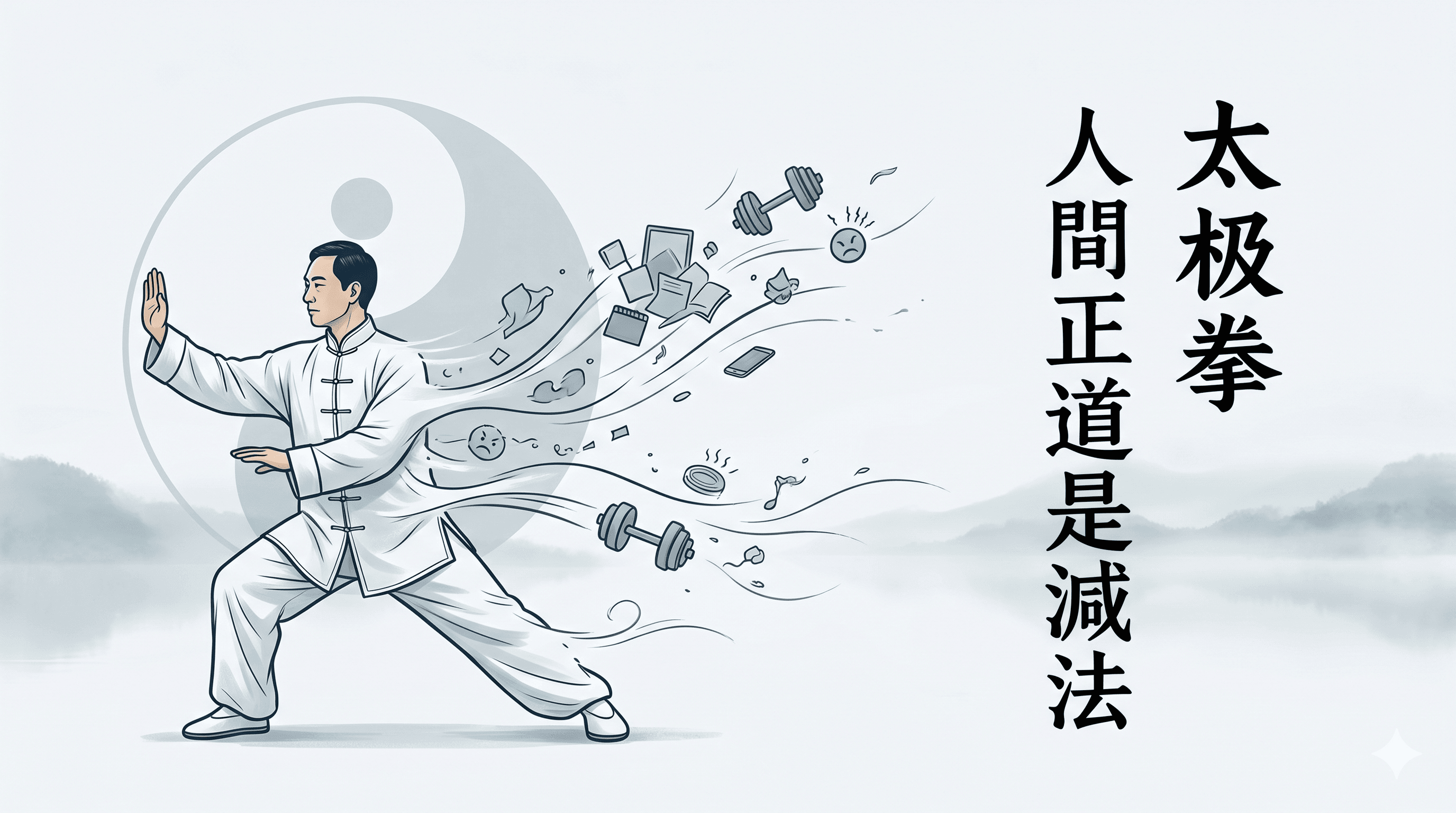
Tai Chi, as a treasure of Chinese traditional culture, is not only a martial art but also a philosophy of life. With its principles of overcoming hardness with softness and achieving motion through stillness, it embodies profound wisdom. The theme “The right path in life is subtraction” perfectly echoes the essence of Tai Chi. The process of practicing Tai Chi is one of subtraction—removing unnecessary distractions, movements, and attachments to return to a state of natural simplicity and balance.
I. The Philosophy of Subtraction in Tai Chi
The core of Tai Chi lies in “winning with no move,” emphasizing the art of simplifying complexity. This subtraction is not mere reduction but the elimination of excess to preserve the essence. Tai Chi postures may seem simple, yet contain infinite variations; its breathing may appear subtle, yet connects body and spirit. Practitioners must abandon brute force and impatience, seeking harmony between body and mind. At the beginning, learners often appear stiff and eager for results. As practice deepens, they learn to “use intention rather than strength,” allowing movements to flow naturally. Subtraction here means less confrontation, fewer obsessions, and reduced anxiety about outcomes. As Laozi said, “In learning, one adds daily; in the Dao, one subtracts daily.” The practice of Tai Chi is precisely this daily subtraction, guiding body and mind back to purity.
II. The Way of Subtraction and Life Wisdom
“Subtraction is the right path in life” is not only the wisdom of Tai Chi, but also a universal philosophy for living. In today’s world of information overload, material accumulation, and mental stress, the Dao of subtraction offers us a way back to authenticity.
1.Simplify Desires, Return to the Heart
Tai Chi emphasizes calmness of mind. Through slow movements and deep breathing, it soothes inner turbulence. Modern people often chase wealth, fame, and achievements, yet true happiness comes from inner peace. By loosening our attachment to external things, we can hear the true voice of the heart.
2.Reduce Confrontation, Resolve Conflict
Tai Chi conquers hardness with softness, using “four ounces to move a thousand pounds.” In life, we often fall into disputes and inner struggles. Tai Chi teaches us to follow the flow, reduce confrontation, and resolve conflict gently. In communication, letting go of the need to win and listening to others often leads to better solutions.
3.Simplify Life, Focus on the Present
Every Tai Chi movement requires full attention, for distraction breaks its rhythm. Likewise, life needs “decluttering.” By reducing unnecessary possessions, relationships, and goals, we free energy for what truly matters. This may mean less meaningless socializing but deeper bonds with family and friends, or fewer distractions but more focus on self-cultivation.
III. Practicing Subtraction in Tai Chi.
Subtraction in Tai Chi is not just philosophy—it is practice, applied in movement, mindset, social life, and daily living.
Movement Subtraction:
Though Tai Chi has many postures, all are rooted in the circle and the breath. Beginners often chase complexity, while masters achieve depth through simplicity. “Grasp the Bird’s Tail” may appear to be just push, press, squeeze, and lean, but it embodies Tai Chi’s essence. By removing excess, movements become clean, precise, and harmonious.
Mindset Subtraction:
Tai Chi trains both body and mind. Practitioners must clear away distractions and release attachment to winning or losing. To stand still, one must be calm; in push-hands, relaxed; in forms, empty. Only when the mind is unburdened can one sink into the rhythm of breath and motion. In life, this teaches us to let go of anxiety and face challenges with focus and composure.
Social Subtraction:
Those who practice Tai Chi often gather naturally through shared interest, forming a healthy social circle. Such connections are free from shallow obligations or superficial ties. As Confucius said, “There are three kinds of beneficial friends and three kinds of harmful friends.” True friendships, like those among Tai Chi companions, are mutually supportive and nourishing. Reducing social distractions is not isolation, but clarity and genuine connection.
Life Subtraction:
The wisdom of Tai Chi extends into daily life. We need not pursue excessive material comforts, nor be swayed by fitness ideals that glorify extreme muscle and physical performance. Practicing Tai Chi alone can nurture body and mind. Likewise, learning is not about reading countless books, but about grasping essentials. True knowledge lies in uniting theory and practice—mastering the core and applying it well can benefit us for a lifetime.
Summary:
The subtraction of Tai Chi is not about losing but about returning. By stripping away the unnecessary, we preserve the essential—simplicity in movement, clarity in mind, authenticity in relationships, and modesty in life. In this way, the simplest practice leads to the deepest wisdom.
IV. The Inspiration of the Right Path
“The right path in life is subtraction” is not only Tai Chi’s wisdom, but also a guide for modern living. In an age of noise and speed, subtraction helps us re-examine what truly matters. True strength lies not in how much we possess, but in how much we can let go. True wisdom lies not in how much we know, but in how much we release. Tai Chi shows us how to find stillness amid chaos, and simplicity amid complexity. In practice, we learn to reduce distractions, return to inner calm; to reduce confrontation, embrace harmony; to reduce meaningless pursuits, and treasure the present moment.
Conclusion
Tai Chi is not merely physical training—it is also spiritual cultivation. It follows the Dao of subtraction, guiding us to find the right path in life. Just as the yin and yang of the Tai Chi diagram blend into one, so too must addition and subtraction in life complement each other. When we learn to remove unnecessary burdens through subtraction, we can add true meaning to our lives. In the circle of Tai Chi, may we all find peace, wisdom, and the right path for our journey.