Is It Really So Hard for Modern People to Practice Taiji Internal Martial Arts?
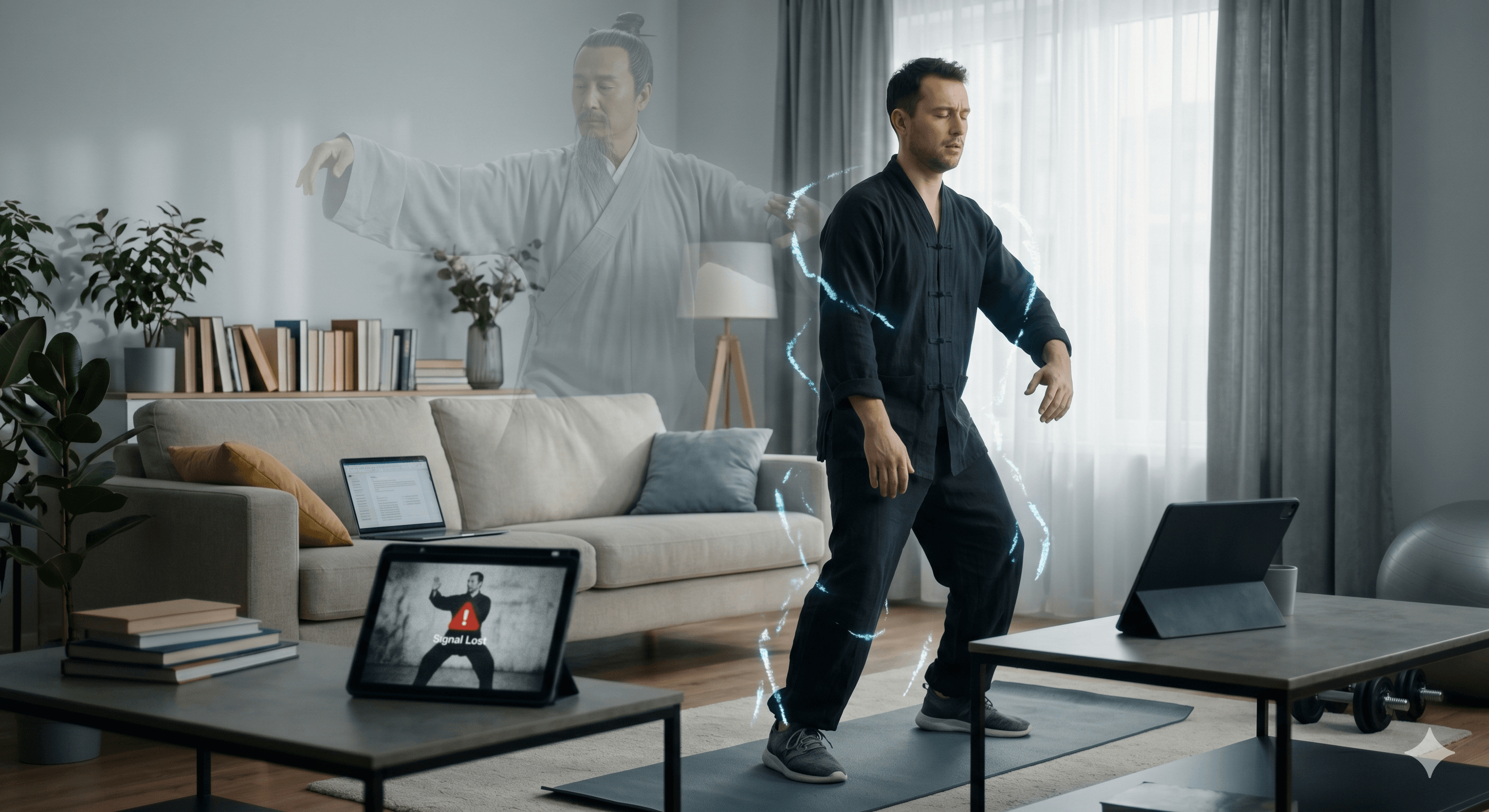
Most people today are busy making a living. Unless they face a life-threatening situation, very few would devote themselves to genuine internal training, or even take the step of seeking out a teacher.
This opinion does reflect how modern people often view Taiji: as a time-consuming practice that requires long-term commitment, and thus feels out of reach for the average person. However, this issue deserves deeper analysis. By looking at the essence of Taiji, the reality of modern life, and the true meaning of practice, we can explore the matter from multiple angles.
I. Is Taiji Internal Training Really “Too Demanding”?
Indeed, internal Taiji practice requires patience and sustained effort. It emphasizes breath regulation, guiding intention, and deep coordination of body and mind — all of which contrast sharply with modern fast-paced living. Yet the idea of it being “too demanding” needs to be reconsidered.
1.Flexibility in Practice
Taiji doesn’t require every practitioner to become a martial expert. For ordinary people, it can serve as a tool for health, relaxation, and emotional balance. Just 30 minutes to an hour per day of simple exercises — like Yang-style basics, Song Gong (loosening exercises), or the Old Frame 13 — can significantly improve health and relieve sub-health conditions. This “micro-level training” doesn’t require large amounts of time, and is both easy and pleasant, fitting well into modern lifestyles.
2.Long-Term Benefits vs. Short-Term Investment
While internal cultivation requires gradual accumulation, its benefits are long-lasting and profound. Rather than calling it “too much work,” it is better understood as a “slow craft that produces fine results.” In a world where stress causes many mental and physical imbalances, Taiji relieves tension, harmonizes qi and blood, and restores balance. Compared with short-lived fitness fads, its benefits endure and even extend to psychological resilience. Those who continue practicing usually find the rewards grow greater with time.
3.The Misunderstanding of “Demanding”
Many think that Taiji practice must chase lofty states of neigong (internal skill). This is a misunderstanding. The threshold for entry is actually very low. Beginners can start with simple, gentle movements and gradually discover its essence. The real measure of progress lies not in hours spent, but in mindfulness. Even short daily practice, if done with focus, can bring noticeable internal change.
II. Modern Life Pressure vs. Taiji’s Compatibility
Yes, modern people are under constant pressure from work and life, which makes it hard to commit to Taiji practice. But paradoxically, Taiji is particularly suited to complement this lifestyle.
1.Efficient Use of Time
Taiji requires no equipment or specialized training space. A small park or even one’s living room is sufficient. For a busy person, setting aside 20–30 minutes in the morning or evening to do Song Gong or simple movements like “Left–Right Exercise” is enough to relax, restore energy, and sharpen concentration.
2.A Tool Against Stress
Modern life is built on “addition”: more tasks, more achievements, more stimulation. Taiji is the opposite — a practice of “subtraction”: reducing desires, reducing unnecessary force, reducing inner noise. Through slow movements and breath regulation, it lowers cortisol levels, eases anxiety, and improves sleep. For busy people, this is especially precious.
3.Prevention Before Crisis
Some assume only when disaster strikes should one value cultivation. But Taiji’s real worth lies in prevention. Just as traditional Chinese medicine stresses “treating disease before it arises,” Taiji builds resilience daily, strengthening both body and mind so one is ready for crises. Waiting until disaster comes is too late; steady small steps now are the wiser path.
III. Why Are True Internal Skills Rarely Taught Today?
Another key issue is the scarcity of genuine internal teaching in Taiji today. This is influenced by several factors.
1.Breaks in Transmission
Traditional Taiji internal work relied on long-term master-disciple teaching, emphasizing the integration of mental methods, intention, and qi-sensation. With modernization, many aspects of this tradition were disrupted. Some teachers, catering to market demand or financial needs, simplified training to focus on surface movements — attractive and flashy, but lacking internal depth. Naturally, the number of teachers with profound internal skill declined.
2.Commercialization and Fast-Food Culture
Modern culture prizes quick results. Many Taiji classes have been turned into fitness routines or performance art, stripping away their internal essence. True internal training requires teachers with both deep mastery and the patience to transmit it — conditions often incompatible with commercial environments. Many students learn only the “form” but never the “intent” or the “qi.”
3.Learners’ Mindset
Many modern students expect rapid progress or treat Taiji merely as leisure exercise. Genuine internal cultivation requires patience and perseverance — qualities at odds with a rushed lifestyle. With fewer serious students, teachers have little motivation to teach deep internal methods.
4.The Influence of Traditional Conservatism
In addition to the reasons already mentioned, certain conservative attitudes within traditional culture have also, often unconsciously, created obstacles for the transmission of internal skill. As noted earlier, genuine masters of internal training are already very rare today. Moreover, true internal cultivation depends heavily on direct teaching — the teacher’s personal guidance, oral transmission, and face-to-face correction. If a teacher’s outlook is limited and he withholds essential instruction at critical points, then no matter how beautifully a student imitates the outward form, the result will remain superficial. Without real internal guidance, it is impossible to develop authentic inner power. This hidden conservatism has caused one of the most lasting and damaging effects on the transmission of Taiji’s internal essence.
IV. How Can Internal Taiji Be Integrated into Modern Life?
Although internal training has its thresholds, it is not out of reach. There are ways to adapt it to contemporary lifestyles.
1.Start Simple
Beginners need not aim for advanced states. Standing postures (Zhan Zhuang), Song Gong, gentle moving drills, or basic Yang-style forms such as “Opening” or “Left–Right Exercise” are enough to begin sensing qi and body-mind coordination.
2.Find Suitable Teachers
Although true internal teaching is rare, there are still dedicated teachers preserving the tradition. Through martial associations, recommendations, or online platforms, one can find instructors willing to teach neigong. Even without face-to-face apprenticeship, modern technology offers quality online foundational courses. For example: Master Wang Zuyao, 8th-generation inheritor of Yang-style Taiji, trained nearly ten skilled practitioners in Tongan, Fujian, and later moved to Saskatchewan, Canada. In recent 3 years, he has cultivated two more advanced disciples there, some of whom are now able to teach foundational methods, including internal practices, in both China and Canada.
3.Integrate into Everyday Life
Internal Taiji does not need to be separate from life. At work, when stressed, one can use breathing and simple forms (like “Opening” or “Ping You”) to rebalance emotions. When walking, one can practice relaxed hip movement; in sports, apply waist-turning techniques; when driving long distances, relax the body through Taiji principles to ease fatigue. Adopting the spirit of “Taiji everywhere in daily life” improves both quality of living and enjoyment.
V. Conclusion
Yes, Taiji internal training requires commitment, but it is far from being an unattainable “luxury.” For busy modern people, its philosophy of “subtraction” offers precisely the medicine needed — helping us find balance in busyness, and calm in pressure. Although genuine neigong teaching is rare today, with flexible approaches and the right mindset, ordinary people can still benefit deeply from it.
Taiji does not ask us to abandon life, but teaches us to live it more wisely. As the saying goes, “the true path lies in subtraction.” By reducing unnecessary pursuits and attachments, we can find harmony and strength within the limited time we have.