
Do You Need to Train “Qi” When Learning Tai Chi?
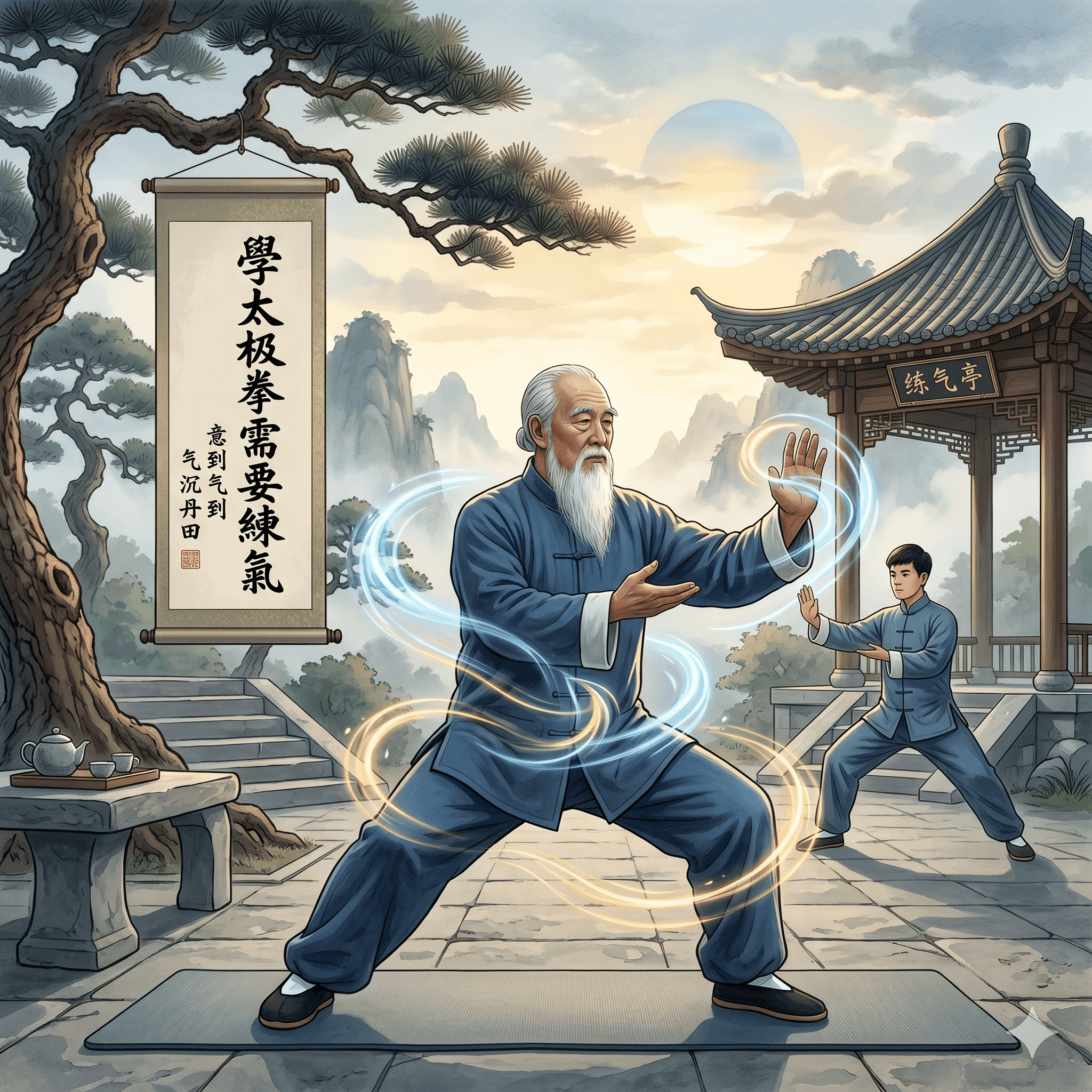
Many people start learning Tai Chi because they’re drawn to its slow, gentle movements and the belief that it improves health. That’s a great goal. Simply practicing the forms can loosen the body, improve circulation, and bring noticeable benefits if you keep at it.
But after some time, if you begin to hope for deeper changes—such as improving long-standing sub-health conditions, truly nourishing the body from the inside out, or even exploring Tai Chi’s unique power as an internal martial art—then understanding and working with “Qi” becomes a turning point.
This brings us to the connection between Qigong and Tai Chi. You can think of it this way: Qi is the energy that drives Tai Chi from within, while Tai Chi is the complete system for cultivating and applying Qi. They are not separate practices but rather “essence” and “function.” Many principles of Qigong—like nurturing Qi and guiding its flow—are seamlessly built into Tai Chi training. In other words, you don’t need to practice Qigong separately. Tai Chi itself is a dynamic, advanced form of Qigong.
So how do you actually feel Qi in Tai Chi practice? It may sound mysterious, but it isn’t. Yang-style Tai Chi has developed a highly systematic beginner-friendly method to help students experience this from the start.
One of the most important methods is called Song Gong (loosening practice). It’s not just stretching or relaxation. Instead, it’s made up of five precise movements designed with one purpose: to help you awaken and directly feel the presence and flow of Qi inside your body. With repeated practice, you’ll notice a real, tangible sense of inner energy being generated, accumulated, and strengthened.
From this first taste of Qi developed through Song Gong, you then deepen it with Zhan Zhuang (standing meditation), Ping You (gentle flowing exercises), and the Yang-style Thirteen Postures form. Together, they give you a solid foundation of internal power. At this stage, when you return to practicing standing or form movements, you’ll feel the connection between the energy in your dantian (lower abdomen) and your body’s motion in a whole new way. Over time, the movements are no longer empty—they’re infused and driven by Qi. This creates a cycle of steady progress, each level of practice lifting you higher, until you begin to move from a place of “using Qi to guide the body.”
For anyone aiming to reach the higher levels of Tai Chi, strong internal skill—meaning Qi—is the essential ladder to climb. It’s the root of whole-body power and the balance of both health and martial application.
In short: to truly master Tai Chi, training Qi is the key that opens the inner hall of the art. And it doesn’t have to feel difficult or mystical. Yang-style Tai Chi has already built a clear, safe, and systematic path for you: begin with Song Gong, Ping You, and Zhan Zhuang, awaken your sense of Qi, and then integrate it into the forms. This journey is not only practical but also full of discoveries—waiting for every dedicated student to experience firsthand.
Comments
Only signed-in members can comment. Comments appear immediately; the team may hide spam or abuse later.
…